When Safety Begins to Take Root Again
Children may carry difficult experiences in ways that are not easy to name. As school routines settle in during autumn, worries, big feelings, sleep changes, or trouble separating from caregivers may become more noticeable in everyday family life. At Healing Roots Therapy, we understand that these moments can bring uncertainty for families, especially when a child seems different from their usual self.
Trauma can follow experiences that felt frightening, overwhelming, painful, or deeply unsettling. Every child responds in their own way, shaped by age, temperament, relationships, and the support around them. Trauma therapy for kids can offer a caring space where children begin making sense of feelings, building safety, and reconnecting with their strengths, without pressure to explain everything at once.
Trauma May Surface in Ordinary Childhood Moments
Difficult experiences do not always appear in conversations about the past. Sometimes they show up at bedtime, during school drop-offs, after a disagreement with a sibling, or in unfamiliar places. A child may seem especially watchful, become upset when plans change, or cling closely to a caregiver after being apart.
Feelings can also come through behaviour, play, body language, and relationships. Some children may become quieter than usual, while others may seem more irritable, controlling in play, or quick to worry. These reactions can be meaningful attempts to cope with distress or uncertainty, rather than signs that a child is being difficult.
Common experiences may include:
- Trouble settling at bedtime or waking during the night
- Strong reactions to changes, transitions, or separation
- Increased conflict at home or school
- Play that repeats themes of danger, rescue, or control
These patterns do not define a child. They can shift over time when children experience consistency, emotional safety, and room to express what feels hard in ways that fit their development. Through child therapy, we can help families better understand what may sit beneath everyday reactions.
How Trauma Therapy for Kids Supports Healing
Therapy can offer a relationship where children feel seen, heard, and accepted, even when words are hard to find. We move at the child’s pace and make space for approaches that may feel less intimidating than a direct conversation. For some children, talking comes more easily after trust has had time to grow.
Trauma therapy for kids may support children as they learn to recognize feelings, notice body signals, practise communication, and build coping tools for difficult moments. It can also support a growing sense of safety in relationships and routines. Healing childhood trauma does not always mean retelling painful events in detail.
Instead, early sessions may centre on predictable routines, shared play, emotional language, and the experience of being supported with difficult feelings. Our therapy services make room for support that reflects each person’s needs and readiness.
Healing Through Play, Connection, and Choice
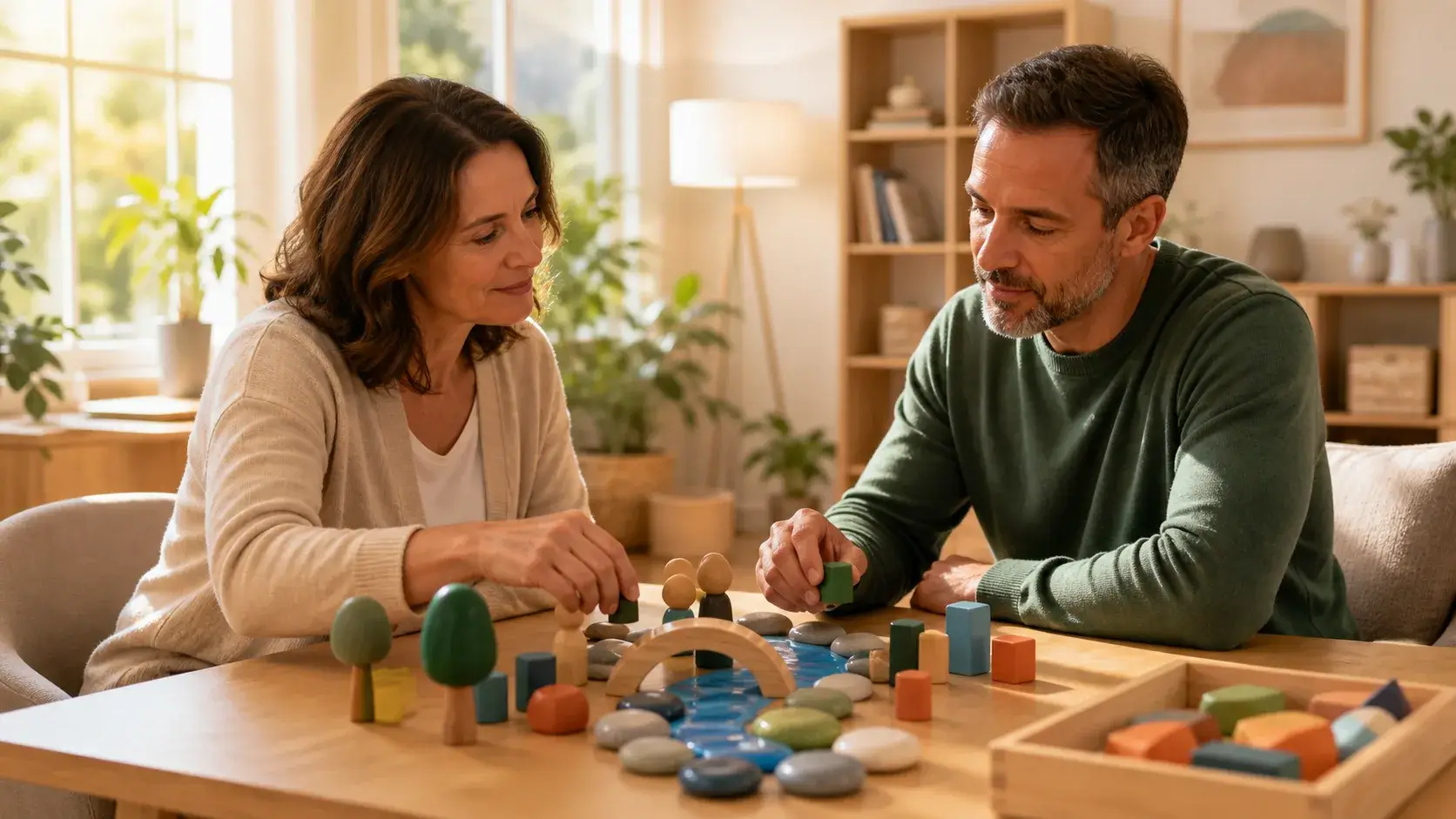
Play can carry meaning when emotions feel too large, confusing, or private to explain directly. Younger children often communicate through stories, drawings, toys, movement, and imaginative scenes. A therapist may notice themes in play while remaining gentle and curious, rather than forcing a child to explain what something means.
Choice can matter deeply after experiences that felt unpredictable or out of control. Small decisions within therapy may help a child feel more agency in a safe relationship. These choices might include:
- Selecting an activity or toy
- Deciding where to sit in the room
- Choosing whether to draw, talk, or play
- Setting the pace for sharing feelings
Small moments of connection can gradually support emotional repair. Being understood during a difficult game, having a feeling named with care, or learning that an adult can stay calm during big emotions may all hold meaning. Therapy for traumatized children can look different for every child because interests, needs, and relationships are unique.
Caregiver Support Can Strengthen Healing
Caregivers often hold an important place in a child’s healing, even when the therapy space belongs mainly to the child. Conversations with caregivers can create room to reflect on patterns at home, school transitions, family stress, and the moments when connection feels hardest after something upsetting.
We may include caregiver support as part of therapy for traumatized children, helping families consider trauma-informed ways of responding to big emotions. This is not about blame or finding a perfect response. It can be a place for uncertainty, grief, worry, and learning together over time.
Family relationships may also benefit from support that considers everyone’s experience. Our teen therapy and couples therapy services can offer additional spaces for older children, caregivers, and relationships affected by stress or disconnection.
Making Room for Steady Healing
Children may heal in many ways, and progress is not always obvious or linear. Some changes may appear in a child’s ability to settle after a hard moment, accept comfort, enjoy play, or feel more secure in familiar routines.
Over time, steady care, meaningful connection, and room for feelings can help safety take root again. Therapy can be one part of that support, alongside the patient relationships that remind a child they do not have to carry difficult experiences alone.
A Gentle Next Step Toward Support
At Healing Roots Therapy, our team offers trauma therapy for kids that may help families better understand what a child has been carrying. A free consultation can offer space to talk through current concerns and consider whether this support feels like a fit. To arrange a conversation, contact us when the time feels right.